Phonics
At The Edward Richardson Primary School, we teach early reading using the Little Wandle Letters and Sounds Revised programme. This is a research-based way of teaching phonics: the method that helps children understand how letters connect to sounds so they can read and spell confidently. When delivered properly, this approach supports all children to become successful readers.
Little Wandle’s teaching follows what we know about how children learn best. It helps children focus, stay engaged, and build secure reading skills step-by-step. The programme uses everyday, short daily lessons that help children learn letter-sound links, practise these in reading and writing, and put them into action in books that match exactly what they’ve been taught.
The approach also includes frequent chances to review, practise and strengthen what has been learned so that these skills move into long-term memory. That means children don’t just learn something once - they keep it and use it more confidently over time.
In short, Little Wandle gives us a clear, effective way to teach phonics and early reading which, when taught consistently, helps every child make strong progress towards becoming a fluent, enthusiastic reader. We also put catch-up support in place whenever it’s needed, so children keep moving forward with confidence. As with many areas of learning, support at home makes a real difference, so we do encourage you to practise phonics (we'll send information home - don't worry!) and hear your child read as much as is realistically possible.

|
Phonics Programme Overview | [pdf 604KB] |

|
Reading
While your child is learning phonics, they will bring home Big Cat books from the Little Wandle scheme. These are matched to the sounds they’ve been taught, helping them read with success and build confidence. Early books may contain only pictures: talking about these together is really valuable and helps children develop the vocabulary they need before reading words.
Once children begin reading simple words, they take home a phonics book that practises their current sounds. These books are meant to feel manageable. Children should be able to read about 95% of the words so they can build fluency. Re-reading the same book over several days is really important, which is why they may keep it for a week.
Children also choose a second book simply to share with you at home. They are not expected to read this fluently - it’s for enjoyment, talking about the story and spending time realising that books are great!
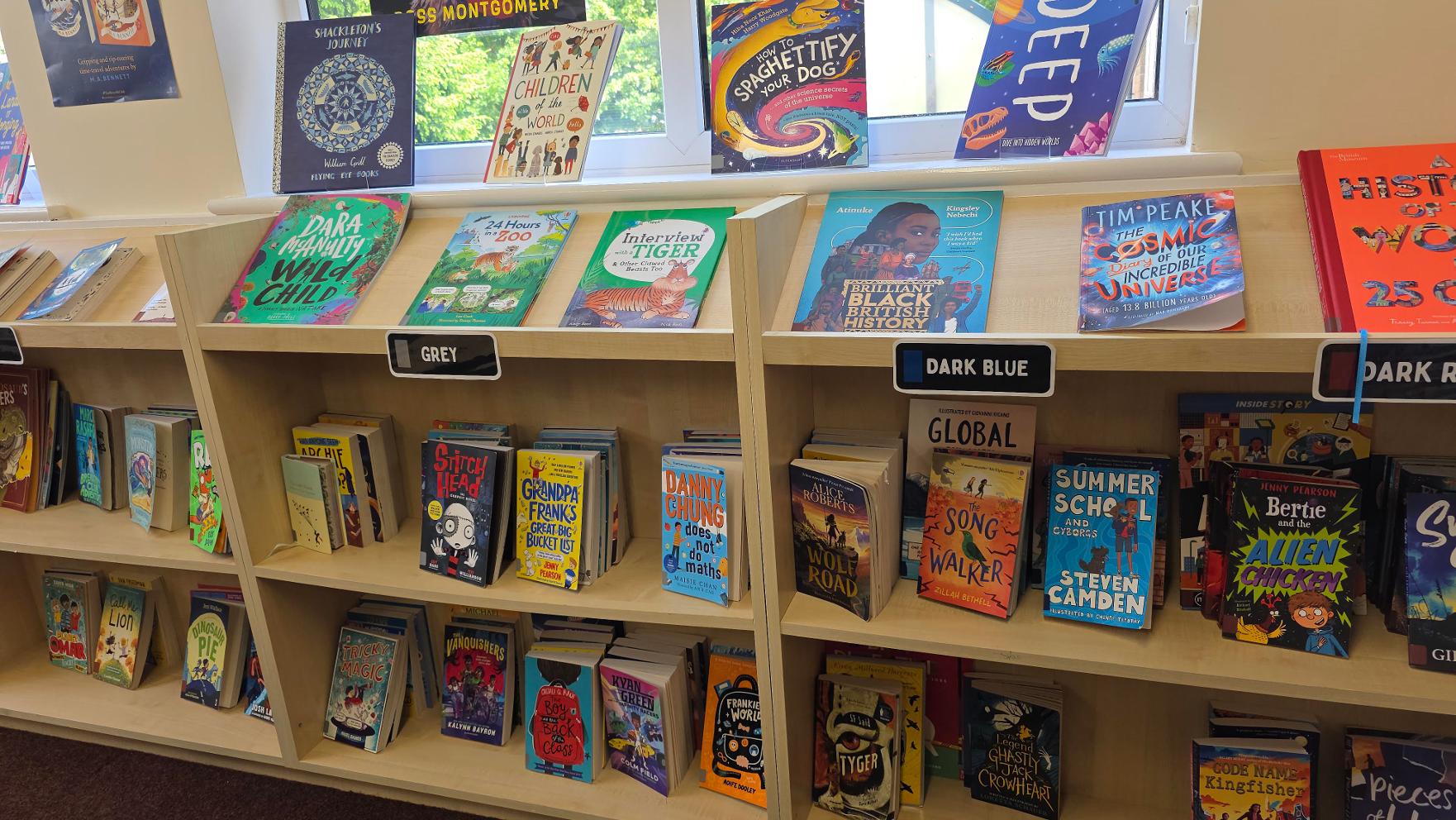
When children move beyond the phonics stage, they join our colour-banded reading scheme, which offers a wide choice of modern, high-quality books. This helps them develop independence while still reading at a level that supports good progress.
From Year 1 onwards, children also learn key reading skills such as retrieving information, making inferences and summarising. These lessons are based on a whole range of texts and help children become thoughtful, confident readers.
Children read in many ways throughout the week. This could be during phonics and English, across other subjects and through quiet reading time. Each class also has a focus book read aloud to them daily, purely for enjoyment. Across the year, all children experience a wide range of genres, including classic fiction, modern stories, poetry, non-fiction, diverse texts and at least one wordless book to build storytelling skills.
|
|
Reading Skills Progression | [pdf 206KB] |
|